Battery safety and recycling
Ordinary alkaline batteries can go in the trash in most US communities, but lithium, rechargeable, coin and car batteries should not. Bag them or tape their terminals and take them to a recycler.[1 · Oct 29, 2026]
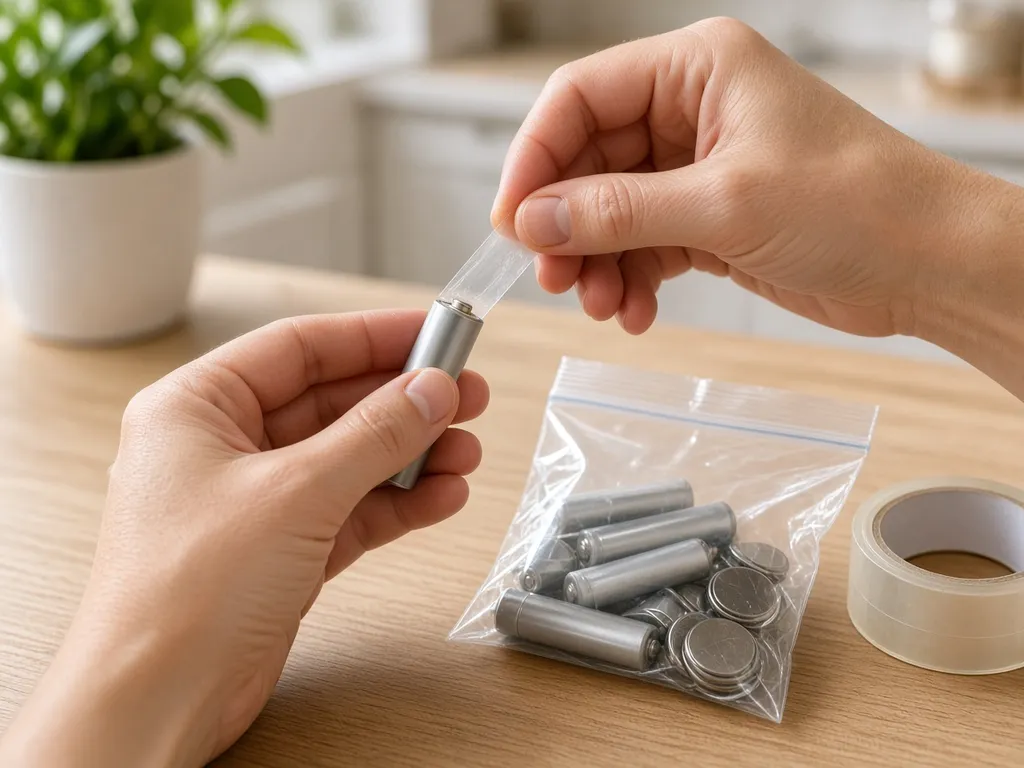
What goes where
| Battery | Examples | What to do |
|---|---|---|
| Alkaline and zinc-carbon | AA, AAA, C, D, 9V | Trash is OK in most communities; the EPA recommends a battery recycler.[1 · Oct 29, 2026] |
| Button and coin cells | Watches, hearing aids, car key remotes, calculators | Not in the trash or recycling bin. Bag them or cover them with non-conductive tape.[1 · Oct 29, 2026] |
| Single-use lithium | Cameras, watches, remotes, smoke detectors | Not in the trash or bin. Look for "lithium" on the label.[1 · Oct 29, 2026][2 · Oct 29, 2026] |
| Rechargeable | Li-ion, Ni-MH, Ni-Cd, Ni-Zn, small sealed lead-acid | Not in the trash. Take them, or the device, to a battery or electronics recycler.[1 · Oct 29, 2026] |
| Lead-acid car batteries | Cars, motorcycles, boats | Return to a battery retailer or a household hazardous waste site.[1 · Oct 29, 2026] |
How to pack batteries for drop-off
- Bag each one (preferred) or tape the terminals.[3 · Oct 29, 2026] Use clear packing, electrical or duct tape; avoid masking, painter's and Scotch tape, and keep the chemistry label visible.[4 · Oct 29, 2026]
- Single-use alkaline batteries don't need terminal protection unless they're marked "Lithium".[3 · Oct 29, 2026]
- Swollen, leaking, overheating or punctured lithium-ion batteries need special handling, so call the drop-off site first.[3 · Oct 29, 2026]
- Every Battery Network drop-off site takes rechargeables, but only some take single-use batteries.[4 · Oct 29, 2026]
- Find a site with the Call2Recycle (The Battery Network) or Earth911 locator.[1 · Oct 29, 2026]
Storing batteries at home
- Even used batteries can hold enough charge to cause injuries or fires.[1 · Oct 29, 2026]
- Don't carry batteries loose in a pocket with coins or keys; they can short and heat up.[5 · Oct 29, 2026]
- Store them in a cool, dry place, and take batteries out of devices you'll store for a long time.[5 · Oct 29, 2026]
- Don't mix old and new batteries or different types, and don't recharge batteries that aren't rechargeable or put them in a fire.[5 · Oct 29, 2026]
If a child swallows a button battery
Call the National Battery Ingestion Hotline at 1-800-498-8666 or Poison Control at 1-800-222-1222 right away, and go to the ER. Don't make the child vomit. More than 3,500 people of all ages in the US swallow button batteries each year, and a battery stuck in the esophagus can cause severe damage in just 2 hours. If it was swallowed within the last 12 hours and the child is able to swallow, the Poison Center suggests 2 teaspoons of honey every 10 minutes on the way to the ER; don't delay going to the ER to give honey.[6 · Oct 29, 2026]
Affiliate links: if you buy through a link in this box we may earn a commission, at no extra cost to you. It does not change the sizes or sources on this page. How we handle affiliate links.
Sources: 1. US EPA, Used household batteries. 2. US EPA, Used lithium-ion batteries. 3. The Battery Network, What to recycle. 4. The Battery Network (call2recycle.org), FAQs. 5. Energizer, Battery cross reference guide (PDF, 2021). 6. National Capital Poison Center, Swallowed a button battery?. Checked Oct 29, 2026. Inch conversions are our own arithmetic from the millimeter figures. Brand names and trademarks belong to their owners; specs are restated in our own words and tables, not reproduced.